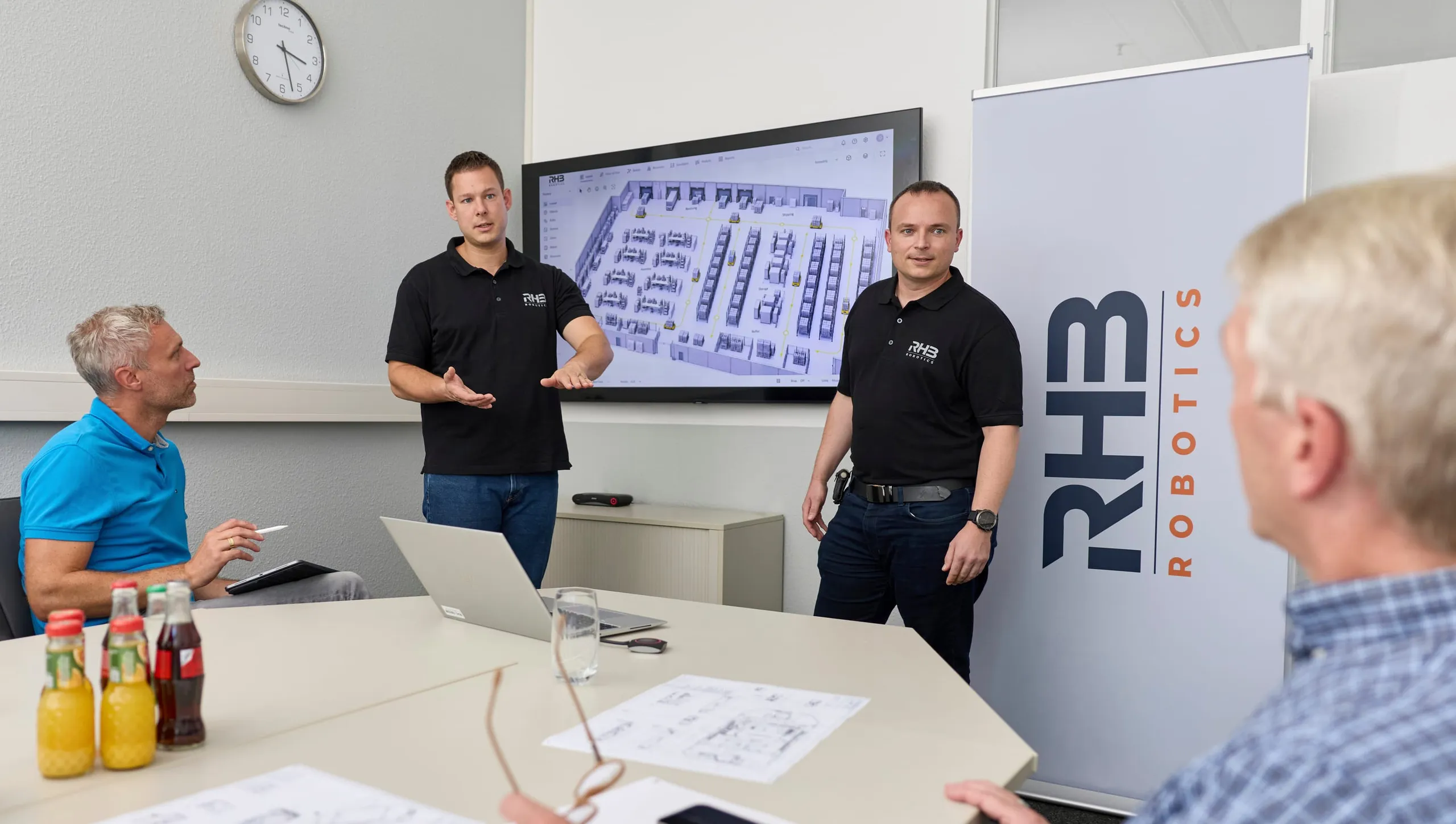
Your hall layout becomes a running fleet.
Five phases from the first layout to daily operation. Each one shows what we contribute and what you contribute, until your idea runs in the hall.
Send us your layoutWhere our systems work.
Does this fit my material flow?Automotive and supplier industry
Electronics and electrical industry
Food and beverage industry
Mechanical and plant engineering
Plastics and rubber processing
Metalworking
Send us your layout.
How do I start?Getting started takes one file.
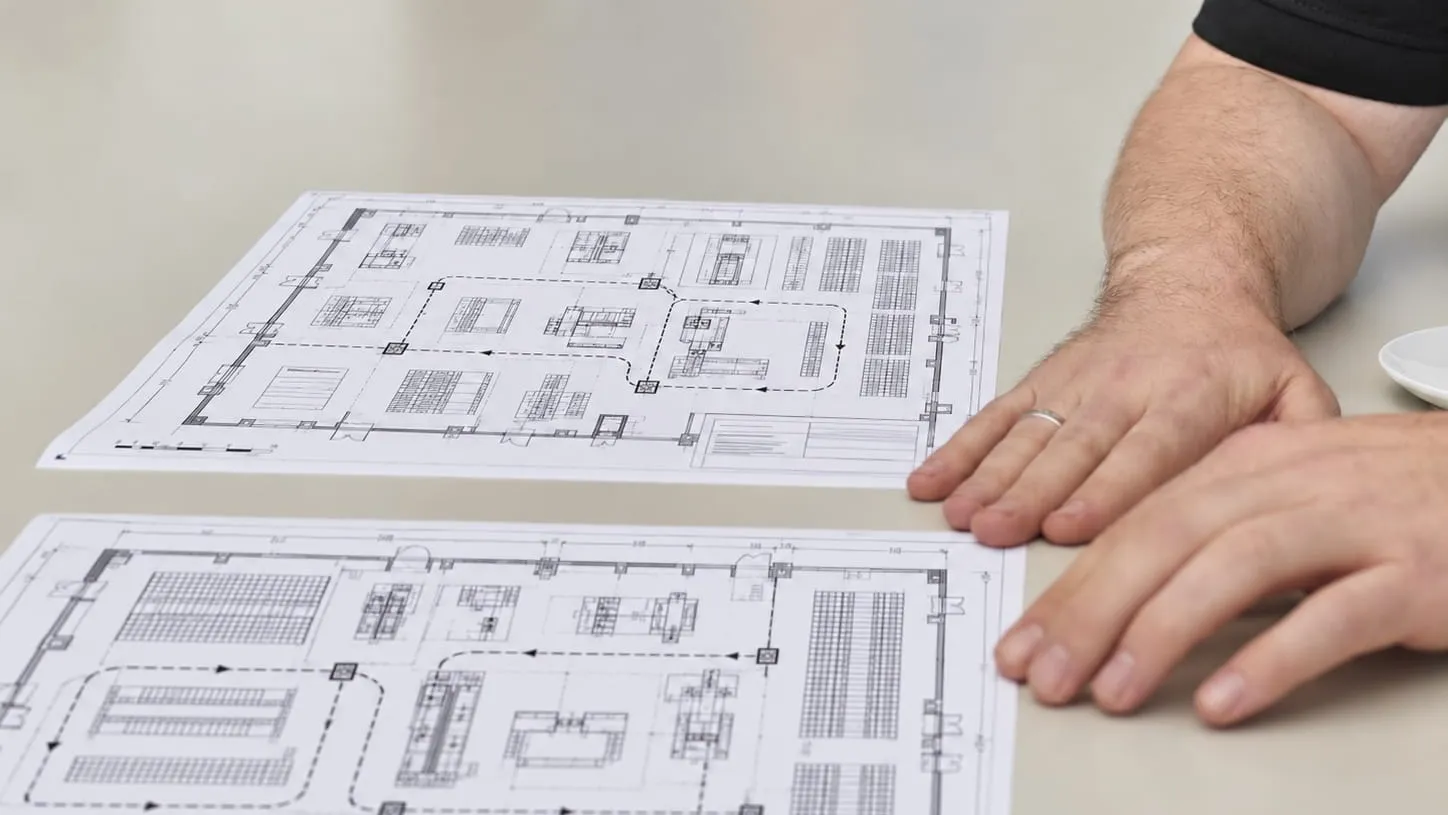
From your hall layout and the volumes per transport relation we derive a transport matrix together. It shows which routes have to be driven how often and with which AMR variant.
From that we calculate how many vehicles your material flow needs and which ones.
Your layout
Hall floor plan with sources, sinks and routes.
The transport matrix
Routes, load carrier types and throughput per transport line.
Your configuration
Which vehicle, in which variant and in what number.
| Line | Load carrier | Source | Loop distance [m] | per shift | per hour |
|---|---|---|---|---|---|
| M1 | Pallet at transfer station | High-bay warehouse | 980 | 14 | 1.8 |
| M2 | Pallet at transfer station | High-bay warehouse | 1,120 | 10 | 1.3 |
| M3 | Mesh pallet container on cart | Goods receipt | 760 | 18 | 2.3 |
| M4 | Pallet at transfer station | Goods receipt | 1,240 | 8 | 1.0 |
| V1 | Stacked small load carriers on dolly | Order picking | 430 | 26 | 3.3 |
| V2 | Stacked small load carriers on dolly | Order picking | 510 | 22 | 2.8 |
| E1 | Handover to conveyor | Packaging | 640 | 12 | 1.5 |
| E2 | Cart | Production | 1,060 | 9 | 1.1 |
| Total | 119 | 14.9 | |||
What this calculation delivers
- Vehicle type and module per transport relation
- Number of vehicles
- Charging stations and where they go
Simplified example. The lines, distances and quantities shown are for illustration only. Hourly figures are averages over an 8-hour shift, rounded to one decimal. The configuration is worked out individually, based on your own conditions.
You do not need a finished concept.
A layout is enough, everything else we work out together.
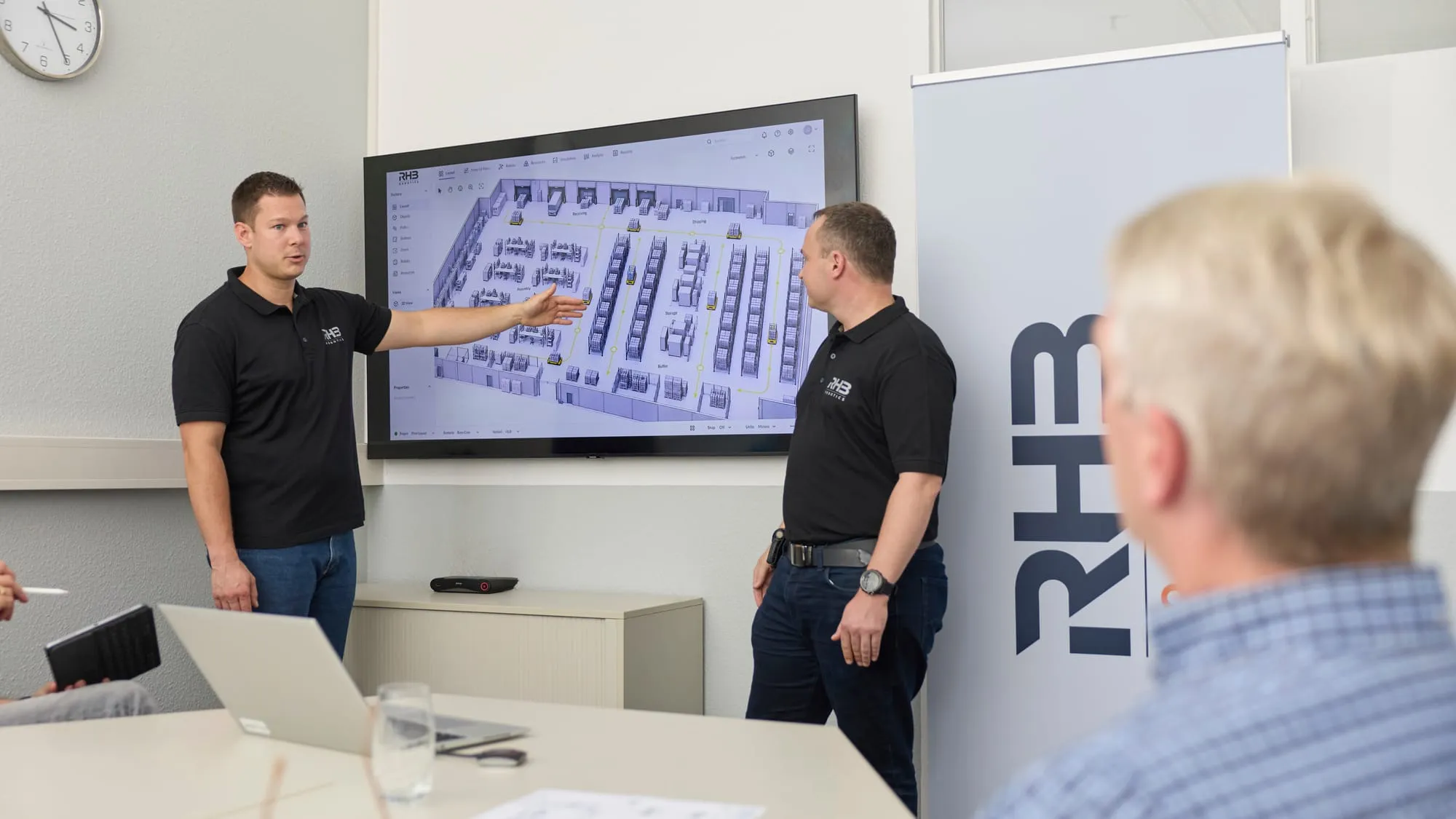
Five phases, from the first question to daily operation.
Every phase has two sides.
What you get from us and what we need from you,
to make our collaboration as efficient as possible.
Requirement and analysis
Is this worth it in my plant?
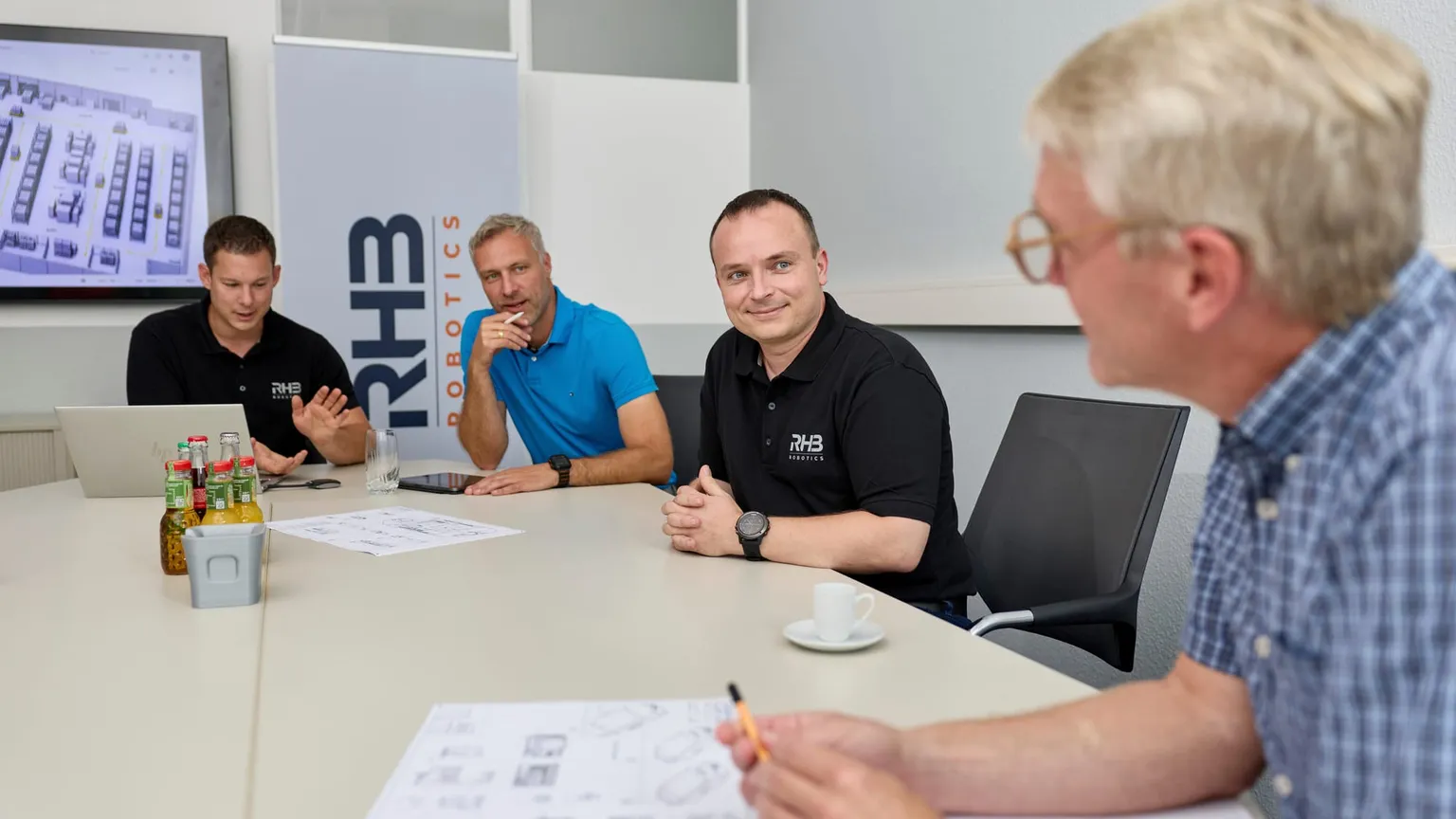
We start with the material flow, not with the vehicle. A transport matrix is built from the layout and the volume figures, and from it the required number of vehicles and the choice of variants.
Which transport relations end up in it we work out together, so you know where automation pays off, where it only pays off once a process is changed, and where we advise against it. At the end of this phase you have a basis for a decision, not a recommendation for our portfolio.
What you get
- Feasibility assessment per transport relation
- Transport matrix
- Required number of vehicles
Your contribution
- Hall layout
- Throughput per transport relation
- One contact person
Solution and quotation
What do I get and what does it cost?
Vehicle variants, charging stations and the connection to your fleet management are defined. You receive a concept with figures and, if you wish, a quotation for the system and the service. Whatever is not included is stated next to it and not in the small print.
What you get
- Configuration of vehicles and variants
- Cost-effectiveness assessment
- If you wish, a quotation for the system and the service
Your contribution
- Decision on the scope
- Contacts from IT and maintenance
Implementation
What happens until delivery?
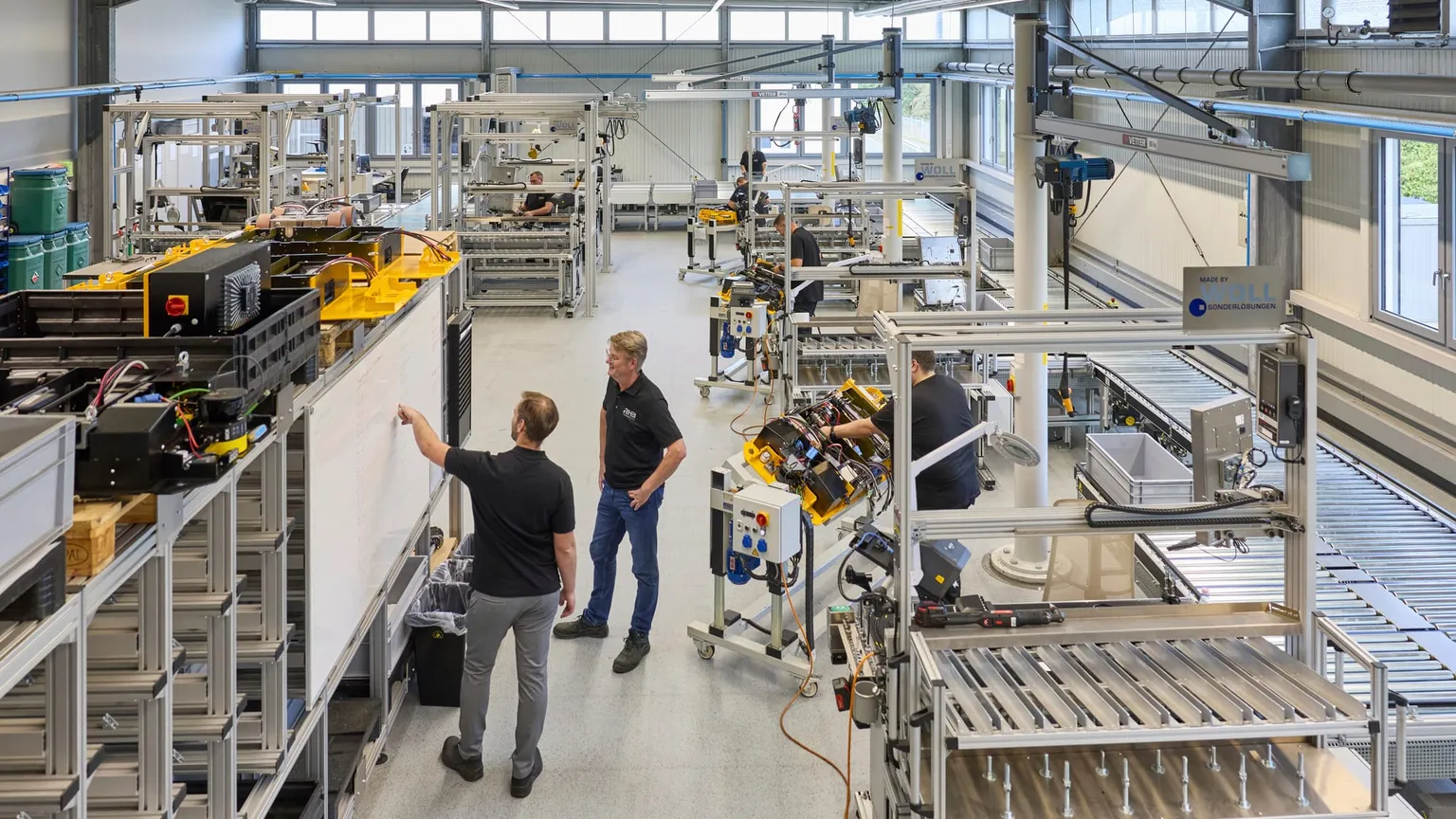
The vehicles are built and tested in Rheinböllen. In parallel the map of your hall is created and the connection to the fleet management is set up. You receive dates and interim reports.
The vehicles speak VDA 5050 and connect to your fleet management without additional middleware. They are proven in the field with SYNAOS, NAiSE and KINEXON, other systems are possible on request. If you already run a fleet management system, it stays.
What you get
- Binding dates
- Interim reports from production and integration
Your contribution
- Preparation of the transfer points
- Network access and IT-side approvals
Commissioning and acceptance
How do I know that it works?
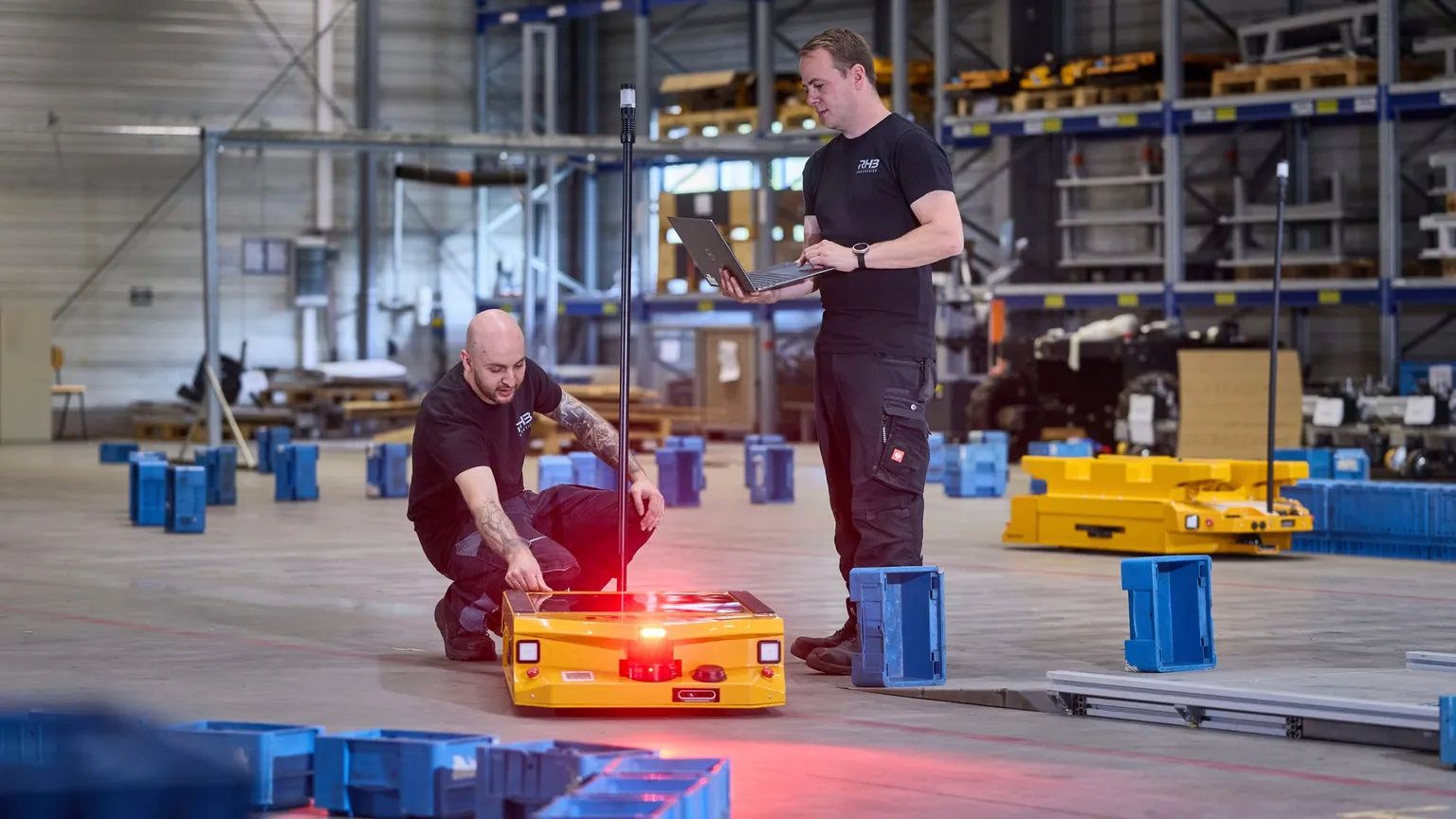
After teach-in the system runs in trial operation under your conditions. We then measure whether it meets the agreed transport matrix and record the result together. How this proof works is described further down.
What you get
- Documented performance proof against the transport matrix
- Basic training for your staff
- Acceptance report
Your contribution
- Release of the area for trial operation
- Load units, staff and equipment for the performance test
- Participants for the training
Operation and support
Who is there when something happens?
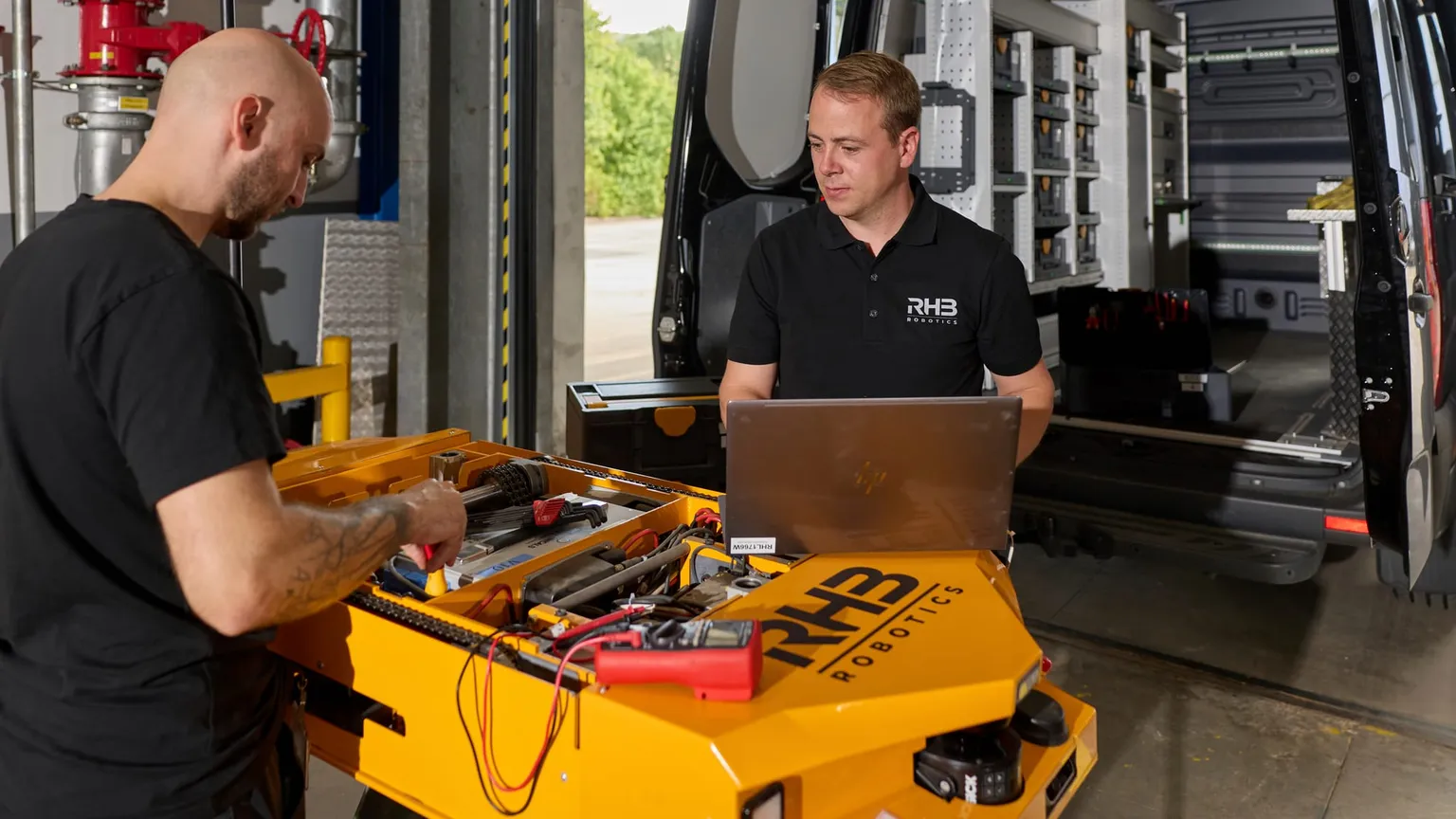
Operation begins with acceptance, and support is in place from day one. For the first 24 months we commit to at least 95 percent of the throughput agreed in the transport matrix. Service scope, operator duties and optional services are set out on our service page.
What you get
- Named contacts
- Hotline support Mon–Sun, 24 hours, remote and on-site support Mon–Fri, 07:00–17:00
- Throughput commitment for 24 months
Your contribution
- Operator duties
- Efficient communication
- Access to the vehicles
A pilot project is enough to start.
How small can the start be?An AMR project does not begin with a fleet but with one transport relation that pays off. From there it grows, if it proves itself.
One transport relation is enough
The fleet is sized according to your transport matrix, not to a minimum size. If routes are added later, the fleet grows with them.
With the load carriers you already have
Carts, pallets, mesh pallet containers or small load carriers. Whether yours fit, or what would have to be adapted, we check beforehand against the dimensions.
In mixed traffic, without barriers
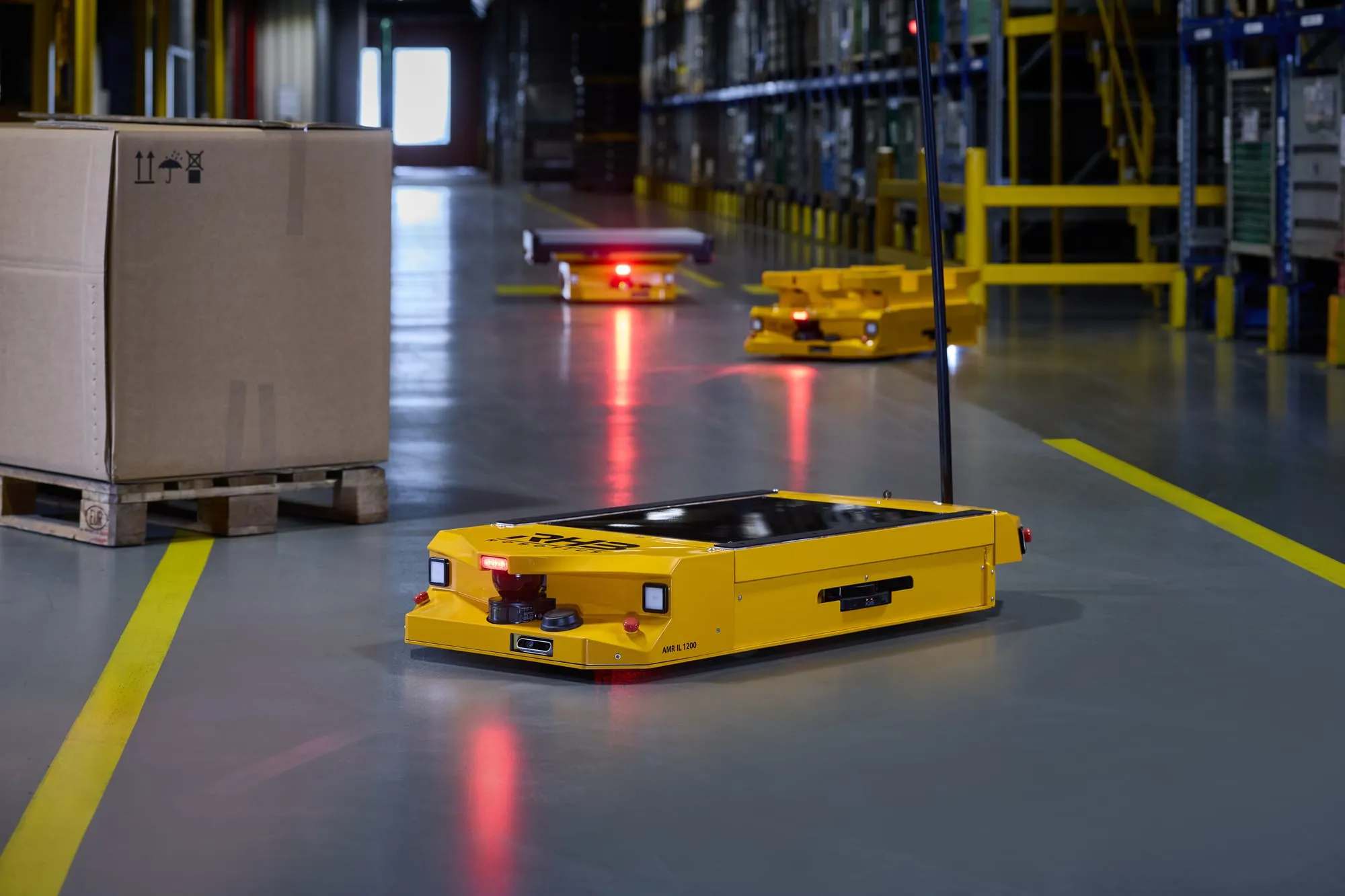
Person detection and protective fields are part of the vehicle. Your staff and forklifts stay on the same routes.
Your floor stays as it is
Navigation works with map, odometry and IMU and does not require floor markings. Additional infrastructure is possible but not a prerequisite. We look at the floor and the transfer points beforehand.
Support from the first day
Hotline support Mon–Sun, 24 hours, remote and on-site support Mon–Fri, 07:00–17:00. Applies from the first vehicle.
How you can measure it.
How do you prove your commitment?Two things that are often lumped together.
The proof after trial operation shows that our sizing is right.
The throughput commitment applies after handover of the systems, for two years.
The performance proof
Measurement is made against the transport matrix we used to size the fleet. The input figure and the test figure are therefore the same, nothing has to be converted. The procedure follows VDI 2710 Part 5.
What is tested is the system of vehicles, fleet management and charging technology, not the individual vehicle. Faults are separated by area of responsibility, so that it remains visible which of them were within our control. We evaluate the result together and record it in the acceptance report.
The throughput commitment for 24 months
For the first two years after handover we commit to at least 95 percent of the throughput agreed in the transport matrix.
What the proof does not do
It measures on a set date under agreed conditions. It proves the sizing, it does not replace operational data collection.
Let us look at the whole picture.
What does this cost me over the service life?The price per vehicle is the item that appears in every quotation. It is rarely the one that decides the cost over the service life.
Which items belong in the calculation
At the start
- Vehicles and modules
- Charging stations and accessories
- Project management
- Commissioning and teach-in
- Basic training for the staff
Over the service life
- Maintenance
- Wear parts
- Spare parts
- Software licences
- Training
Where this already runs.
Can I come and see it?Our own use case
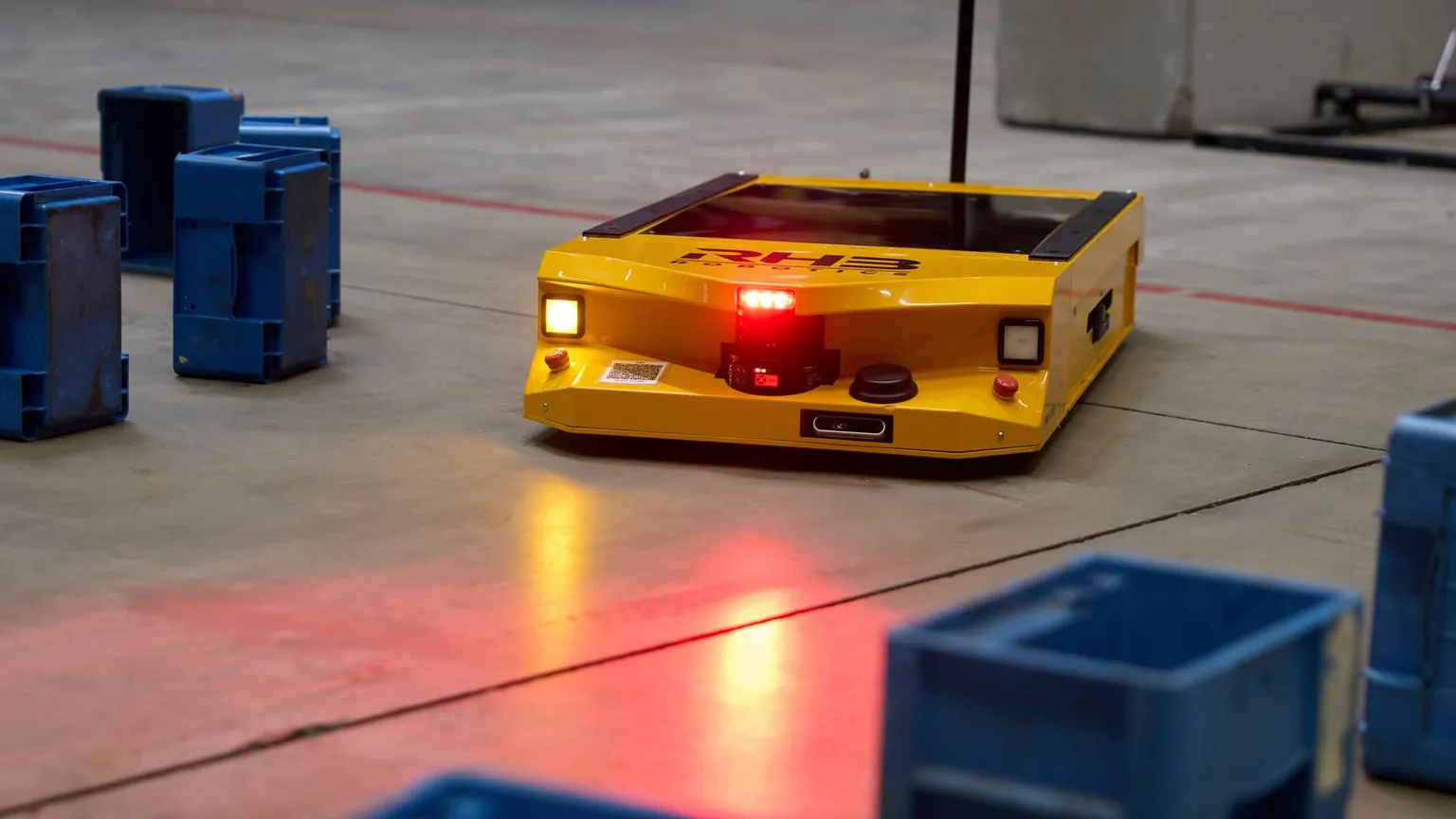
In Rheinböllen autonomous mobile robots run in the series production of safety-critical automotive components. Not on a test area, but in the material flow the production depends on. The same vehicles, the same fleet management, the same charging stations that we also supply.
You see vehicles in mixed traffic with staff and forklifts, at various transfer points and their charging stations. From triggering an order to the completed run.
See it in operation, not in a brochure.
Can I see for myself before I decide?We show you the installation in Rheinböllen in daily operation. The people who developed the vehicles and who run the material flow are there. Bring your questions, and your layout if you like.
A date depends on the production schedule, so we agree it with you. Write to us what you would like to see and we will come back with proposals.
Request a visitA conversation, not a sales appointment.
Who am I dealing with?No form inbox, but a name. For everything that concerns an AMR project, from the first question to the quotation.

Andreas Kerkenhoff